
Articles
Christmas is the greatest mystery

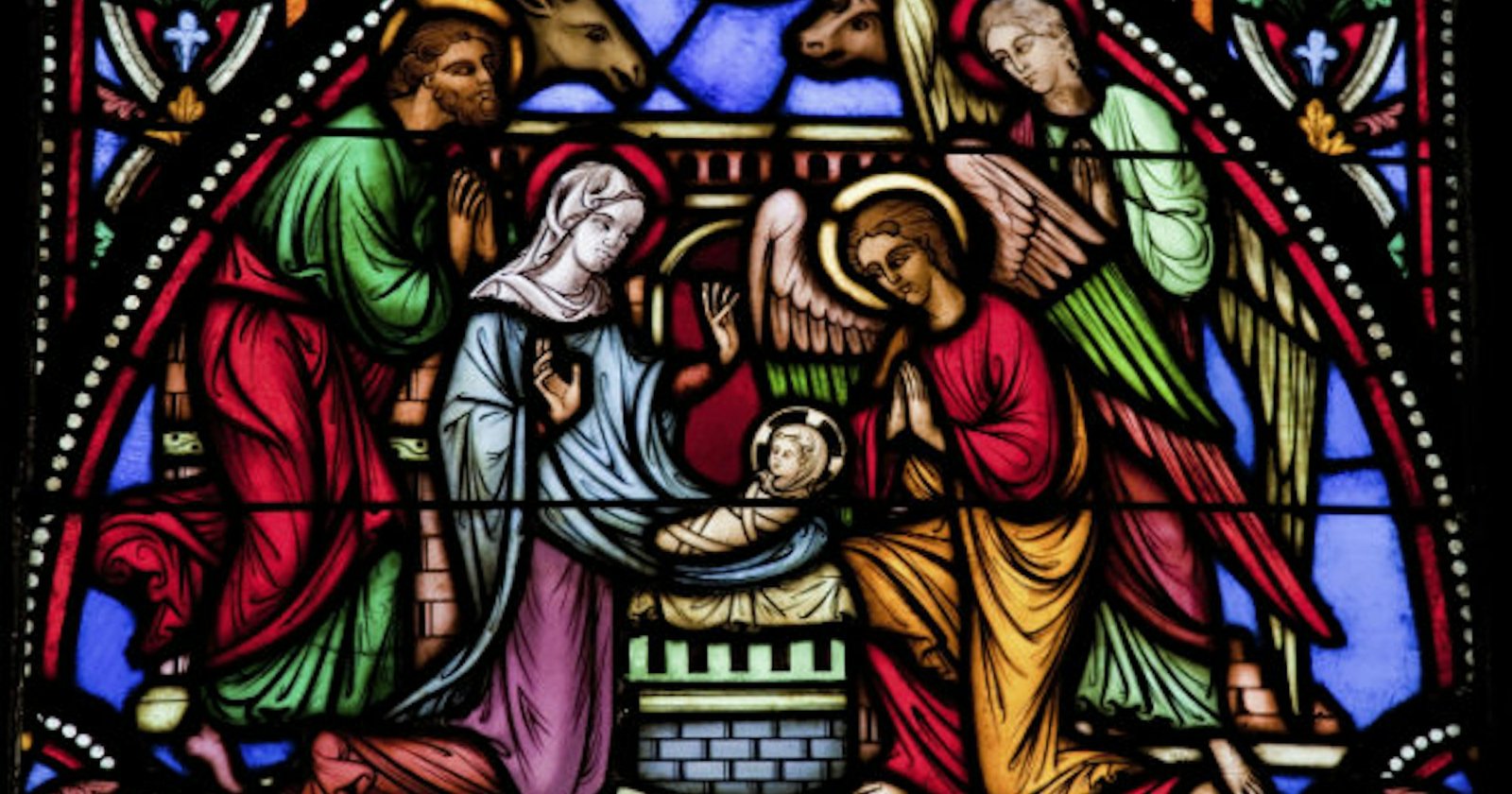
This is the hour that divided history in half.
Before that first birth, He was, from eternity, the divine Son and the second person of the Godhead. He was God’s joyful agent in creation (John 1:3; Col. 1:16; Heb. 1:2) and from the beginning of time sustained the universe at every moment (Col. 1:17; Heb. 1:3).
But then a great change took place—a blessed addition—at the very center of reality. The Word became flesh (John 1:14). God became man. The Creator came as a creature, the Author entered His story as a character. Leaving nothing behind that which is God, He took upon Himself all that is man.
«"Without leaving anything behind that which it means to be God, He took upon Himself all that it means to be man.".
This great truth, which lies at the heart of what we celebrate at Christmas, is called the «incarnation» of the Son of God—God Himself taking on human flesh, blood, and all of our human nature. Christmas is the time when He adds humanity to His divinity to save us from our destructive rebellion against Him and to grant us the eternal pleasure for which we were created.
This mysterious unity
This is a great discovery, but at the same time a profound mystery. This is the greatest mystery in all history: how God became fully human without ceasing to be fully divine—how the entire divine nature was united with everything human. In church tradition, this is called the «hypostatic union,» the union of two different natures in one indivisible person (where «hypostatic» means «personal»). Jesus is fully God and fully human in one amazing person.
And this unity of God and man in Jesus makes possible our union with the Godhead through Him. But the greatest mystery is not how we are united with God through faith (through pure grace and the work of the Holy Spirit), but how God is united with us in the one person of Christ.
«The unity is so perfect,» says D. A. Carson, “that although He has two natures, He remains but one person.” It is almost too good to be true.
So, «Jesus really shares with us everything it means to be human,» adds Russell Moore.
He is really a man.
When you ask Moore about the person of Christ, Hebrews 2:11–14 comes to mind, which talks about the humanity of Jesus. «The humanity of Jesus is often difficult for evangelical Christians to understand,» he says. “We quickly accept the divinity of Christ, at least from orthodox circles. We have known from day one that Jesus is God. We understand his divinity. But he was also a real and genuine man and remains a real man.”.
Moore cites «four fences» that come from early Christian councils and protect us from error when it comes to this great Christmas mystery in the person of Christ: He is 1) fully God, 2) fully man, 3) as one person in 4) two natures.
He «humbled» Himself
One of the difficulties in this for the human mind is that we tend to think of divinity and humanity as mutually exclusive concepts. We might assume that if He "became man," He must, in some way, have ceased to be God. Then we come across the text, in Philippians 2:7, where it says that He "humbled Himself," and we ask: Did He humble Himself in His divine attributes?
Carson answers: «This expression does not simply mean that He humbled Himself; it is an idiomatic way of saying that He became nothing. He utterly humbled Himself, not only by becoming man, but also by going to the humiliation, shame, and torture of the cross… It is a wondrous, incomparable, incomprehensible, undeserved self-abasement in the process of Christ becoming man and then going so far as to become not just a slave but a slave who dies on the cross.».
The Revealing Mystery: Three Lessons
The Incarnation remains a great mystery, but Scripture doesn't make it completely mysterious. From our 17-minute interview with Carson and 14-minute interview with Moore, here are three important lessons this amazing doctrine reveals to us.
- The divine and human natures are not mutually exclusive. «The two natures do not diminish each other,” says Carson. “He is truly human, with all that that implies, and truly God, with all that that implies, in two natures that retain their distinctness, even as we insist that they are so united that he is but one person… Such formulations are necessary to preserve the diverse voices of the New Testament in order to clearly explain what the Bible says about Jesus as the God-man, in a concise and understandable form.
And this lesson about the person of Christ, where the full divine and full human natures are complementary, gives us a deeper understanding of other striking, multidimensional realities. Among them are the divine-human authorship of Scripture and the mysterious tension between the sovereignty of God and the responsibility of man.
- Human nature is relevant to our daily lives. Moore recalls Jesus« thirty years as a »working-class« man in »a completely unremarkable place.« Year after year, His quiet life, before beginning His »public ministry,” serves as a wonderful confirmation and sanctification of our ordinary and unremarkable lives.
His incarnation also emphasizes the amazing value, privilege, and dignity of humanity as God’s highest creation. Even higher than the angels. «It was revealed to them that not only for themselves but also for us were the things that were announced to you by the Holy Spirit sent from heaven through the evangelists, which angels desire to see» (1 Pet. 1:12). It is not an angel who now sits on the throne of the universe, but a man (Heb. 2:9). What an amazing grace that Jesus «is not ashamed to call us his brothers» (Heb. 2:11).
- Jesus is the foundation of prayer and worship. In becoming man, He became to us the visible image of the invisible God (Col. 1:15). He is the radiance of His Father’s glory (Heb. 1:3). Our «light of the knowledge of the glory of God» comes «in the face of Jesus Christ» (2 Cor. 4:6), and He is the only «lamp» that will give light of God’s glory in the new creation, where there will be no need for sun or moon (Rev. 21:23).
So, says Moore, praying «in Jesus» name« is not a magic formula. »Jesus is the only person who has the right to approach God.” Who may ascend the mountain of the Lord? is the question of Psalm 24, and the ultimate answer is that Jesus is the only one who fully fulfills this vision, and only in Him can we ascend.
The greatest mystery of Christmas is also its greatest revelation. "God has joined us forever," says Moore. "God has identified Himself with us forever.".
