
Articles
We know they kill children – we all know it!

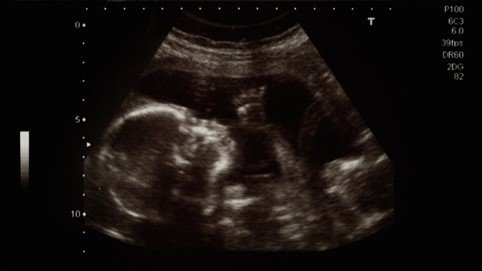
One of the biblical principles of justice is that the more we realize the wrongfulness of our actions, the more responsible we are for them and the more severely we deserve to be punished (Luke 12:47-48). The point of this article is that when it comes to abortion, we know what we are doing—and the whole world knows it. We are killing children. Both abortionists and anti-abortionists understand this.
But before I demonstrate that, let's remember what the U.S. Supreme Court did 45 years ago. In Roe v. Wade. The Supreme Court effectively made abortion on demand legally untouchable. It did it in two steps.
The first step is to recognize that laws cannot prohibit abortions even during the full nine months if the abortion is performed «to preserve the life or health of the mother.» The second step is to define «health» as encompassing all factors—physical, emotional, psychological, familial, and age—that affect the well-being of the patient.
For the past 40 years, this has meant that any perceived distress could be grounds for legal termination of a child. Over 50 million babies have died since then. And what adds to our guilt as a nation is that we know what we are doing. Here is some evidence that we are aware of it: we are killing children.
Doctors who perform abortions admit they kill babies
Many people simply consider it the lesser of two evils. I once invited an abortion doctor to lunch, preparing to give him ten reasons why the unborn are people. He stopped me and said, «I know it. We kill babies.» I was stunned. He explained, «It’s simply a question of justice for women. To deny them reproductive freedom[1] would be a greater evil.".
This means that women should not suffer the consequences of unplanned pregnancies any more than men. This equality in freedom from unwanted children is the basis for abortion, which President Obama has repeatedly spoken about publicly in his advocacy for women's equality. And we know what that means. We are killing children.
Many state laws consider the killing of unborn children to be murder.
We know what we're doing because 38 states, including Minnesota, consider the killing of an unborn child a form of murder. They have so-called "feticide laws.".
«"When unborn children are wanted, they are considered children and patients. When they are unwanted, they are not recognized as children.".
This means that it is illegal to take the life of an unborn child if the mother wants it, but it is legal if she does not want it. In the first case, the law treats the fetus as a person with rights; in the second, as a non-person without rights. Humanity, then, is determined by the will of the strong. We reject this approach in cases of Nazi anti-Semitism, Confederate racial slavery, and Soviet gulags. When the humanity of the unborn is determined by the will of the strong, we understand what we are doing.
Fetal surgery treats the unborn as children and patients
Perinatologist Steve Calvin, a specialist in high-risk pregnancies, in a letter to Arizona Daily Star (a daily newspaper published in Tucson, Arizona, USA) wrote: «There is an undeniable schizophrenia in the fact that a 22-week-old fetus is aborted in one hospital and its cousin is operated on in utero in the same hospital.» When the unborn are wanted, they are recognized as children and patients. When they are unwanted, they are no longer children. We know what we are doing.
Small size does not deprive a person of personality
A teenager's height of 176 cm does not give him any more right to life than his younger sister's height of 58 cm in her mother's arms. Size, as we know, has no moral significance. One centimeter, 23 centimeters or two meters - none of this matters to the one who must be protected. We understand what we are doing by killing the smallest.
The lack of a developed ability to think does not deprive a person of the right to life
A month-old breastfed infant is incapable of thinking. But few would dare to argue that infanticide is permissible because of this. Most understand this. Both inside and outside the womb, an infant is not yet capable of thinking, but that does not make it any less human. We know what we are doing.
Being in the womb does not deprive a person of human dignity
Location does not determine the right to life. Scott Klusendorf asks, «How does a 18cm journey through the birth canal suddenly transform a fetus from non-human to human?» We know what we are doing.
Dependence on the mother does not devalue the individual
We consider people on ventilators or dialysis as individuals, despite their dependence on medical devices. Similarly, an unborn child cannot be deprived of its human essence simply because it depends on its mother for food and oxygen. In fact, society is guided by a completely different principle: the more a child depends on us, the greater the responsibility we feel for its protection. Dependence does not diminish its right to life, but on the contrary, it strengthens our moral obligation. We are aware of what we are doing.[2]
A person's unique genetic code is formed from the moment of conception.
The genetic makeup of a person from the moment of conception is unique. This is a scientifically proven fact that was previously unknown. However, today we know it. Each person has their own unique genetic code that determines their individuality and physical characteristics, and this code remains unchanged throughout life.
At the eighth week of pregnancy, all organs are present
The brain is already functioning, the heart is beating, the liver is producing blood cells, the kidneys are purifying fluids, and even a fingerprint is forming. Yet most abortions still occur after this stage. This shows that we are fully aware of what we are doing.
We saw the photos.
Thanks to ultrasound, we have a unique opportunity to look inside the mother's womb. There you can see how the unborn child sucks a finger, reacts to sound and pain. We know that these are children.
When two rights conflict, the higher value should be protected
«"The right to life is more important and valuable than the right to personal choice.".
We are guided by the principle of justice, according to which, in the event of a conflict between two legal rights, the right that protects the higher value prevails. For example, we deny the right to drive at 100 miles per hour because the value of life is more important than the value of being on time or experiencing a thrill. The right of an unborn child to life and the right of a woman not to be pregnant may conflict, but they are not equal. Even if a woman has the right to personal choice, this right cannot override the fundamental right of an unborn child to life. It should not include the possibility of killing another person, even if that person is not yet born. Staying alive is more important and valuable than terminating a pregnancy. We are aware of the consequences of killing a child.
Three goals for moving forward
For Bible-believing Christians, there are many more reasons why we understand what is happening with abortion and why it is wrong. However, our goal is threefold:
- We seek to prove that ignorance is no excuse. We knew. All of us. It is amazing how relevant the words of Proverbs 24:11-12 are in our current abortion situation:
«Save those who are in danger of death! Will you refuse those who are condemned to death? Will you say, ‘We did not know this?’ For does not He who tests the hearts know? He who guards you knows. about everything. He repays. each "to a man according to his deeds.".
- We seek to strengthen our conviction to resist this terrible evil.
- We seek to intensify our prayer and our preaching towards the evangelical renewal of the soul in our land, for sinful hardness of heart, not innocent ignorance, lies at the root of this tragedy.
[1] According to the WHO: Reproductive rights are based on the recognition of the fundamental right of all couples and individuals to decide freely and responsibly the number and spacing of their children, to have the information and means to do so, and to the enjoyment of the highest attainable standard of sexual and reproductive health. They also include the right of everyone to make reproductive decisions free from discrimination, coercion and violence (translator's note).
[2] These last four aspects of points 4-7—size, level of development, environment, and degree of dependence—were summarized by Scott Klusendorf under the acronym SLED: none of these factors can be used to justify abortion, as they do not affect human dignity and the right to life