
Articles
Why preach?

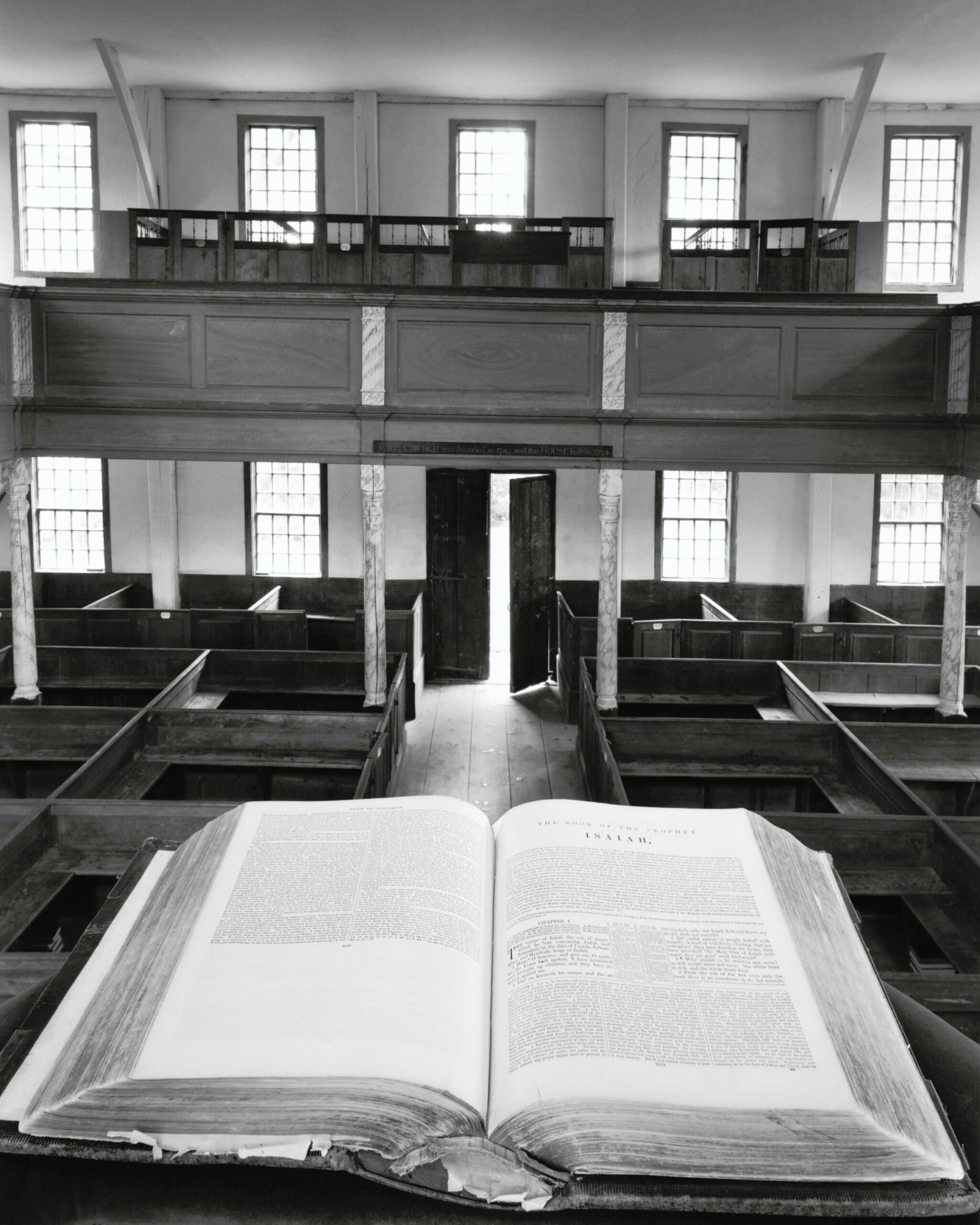
Last week I spent about 25 hours preparing our Sunday sermon. It was based on 1 Samuel, chapters 9-11, so perhaps it would be more appropriate to call it not just a sermon, but an «expositional sermon.» During the sermon, I read the entire text and then spent another 40 minutes explaining its meaning and applying it to the hearts of the audience. And no, I don’t live in pre-Enlightenment England, and I’m not doing this as a tribute to «Puritan Sermon Day» on our annual church calendar. To be honest, our senior pastor hates such annual calendars, but that’s a topic for another article.
Why is it worth spending so much time studying God’s word? And why do we, as a church, devote an hour to my (sometimes painful) monologue? I’ve been asked this question many times before. And I’ve received gentle rebukes from well-meaning friends. They ask, why do you single out the sermon from other forms of worship? Doesn’t that reflect your Western bias toward rational, reasoned, and orderly discussion? After all, no one will remember 95% what you say. In other words, they say, «Stop wasting your time—and ours too!»
However, before you abandon Scripture in favor of visual art during your Sunday gathering, let me offer a few reasons why the sermon should be not only present but central to the life of your local church.
God's people gather to hear God's Word
Believe it or not, I don’t have a natural desire to sit and listen to someone speak to me. I would much rather be inspired by a movie, energized by a storming drum solo, or moved by a stunning piece of art. But consistent examples in Scripture show that God’s people gather to hear God’s Word. We are to remain silent while He speaks.
- When God establishes His covenant with the people during the Exodus, He uses words and commands His people to gather to hear these words (Exodus 24:7).
- As Israel's enemies flee, God commands his people to halt. There, beneath the steep mountains, Joshua did as the Lord commanded him:
«Then he read all the words of the Law, the blessings and the curses, according to all that is written in the book of the Law. There was not a word of all that Moses commanded that Joshua did not read before all the congregation of Israel, including the women, the children, and the foreigners who were among them» (Joshua 8:34-35).
- When King Josiah leads his people back to the Lord, he does so by reading «in the hearing of all the people the words of the Book of the Covenant that was found in the Temple of the Lord» (2 Chron. 34:30).
- When all of God’s people gather as one after the captivity, Nehemiah commands Ezra to stand on a wooden platform (Neh. 8:4), and while the people remained in their places (8:7), Ezra and the scribes «read from the Book of the Law of God distinctly, giving the sense, so that the reading might be understood» (Neh. 8:8).
- Jesus' public ministry in the Gospel of Luke begins with Him entering the synagogue, taking the scroll of Isaiah, reading from it, and teaching from it (Luke 4:14-22).
- In the book of the Acts of the Holy Apostles, chapter 2, the people are not saved through a gospel airship, but through Peter's public preaching from the book of the prophet Joel, chapter 2.
- Deacons were established in the book of Acts of the Holy Apostles, chapter 6, not so that the apostles could learn the latest theatrical techniques, but so that they would have the opportunity to preach the Word of God (Acts 6:2).
- Paul calls Timothy to preach the Word (2 Tim. 4:2).
I could go on and on. The eye excites, but the ear gives strength. We don't need Tetzel's skits about the gates of heaven and the flames of hell. God's people should gather to hear God's Word.
Preaching the Word of God teaches your people how to read the Word of God
Not long ago, David Wells lamented that evangelicals no longer have the courage to remain Protestant. Today, we struggle to be, in any sense, historically Christian. When the cultural wave of gender and sexuality comes crashing down on us, we have nothing to say because we think the Bible no longer has the answers, or we don’t know what it says, or we see it as nothing more than a collection of moral stories—a religious version of Aesop’s fables that can be reinterpreted to fit our cultural norms.
But keeping God’s Word at the center of your local church’s life, especially through expository preaching of Scripture, teaches your people how to read the Bible. They don’t need a seminary course in hermeneutics to do this; what they need is faithful preaching.
A sermon that connects:
- the power of God's creative word,
- the fall of the first Adam,
- the need for sacrifice,
- the promise of a second Adam and a new Eden.
- A sermon that connects what God has done through Israel to Jesus and the new Israel of God.
My early Christian life was spent in churches that loved God’s Word, but they didn’t see it as a mountain of gold to be mined, but rather as a hill with a few scattered pebbles. It wasn’t until I came to a church that «mined» the word, carefully connecting rich biblical themes and showing how it all pointed to Christ, that I began to approach the Old Testament with confidence and encouragement. Keeping God’s Word at the center of preaching and teaching will not only help people learn how to read it, but will also inspire them to delve into it for themselves.
The preaching of God's Word is designed to change their lives, week after week.
What good is all this preaching if we quickly forget most of what we hear? But we don’t forget everything we hear. Hopefully, most of us can recall sermons that challenged our perceptions of God, marriage, money, etc.—and changed us forever. So don’t dismiss this matter.
Moreover, the weekly word in our Sunday sermons is intended solely to prepare us for the following Sunday! In God's weekly rhythm, He seems to understand that on Sunday we are hungry and need to be filled again.
My sermons, your sermons, are not meant to stay with our people forever. They are not meant to change their lives in that sense. Their purpose is to sustain us until next week. Week after week. All the way to heaven. And there the Word made flesh will live with us forever, and there will be no need for sermons anymore.
