
Articles
He died many times—and lived on: Adoniram Judson (1788-1850)

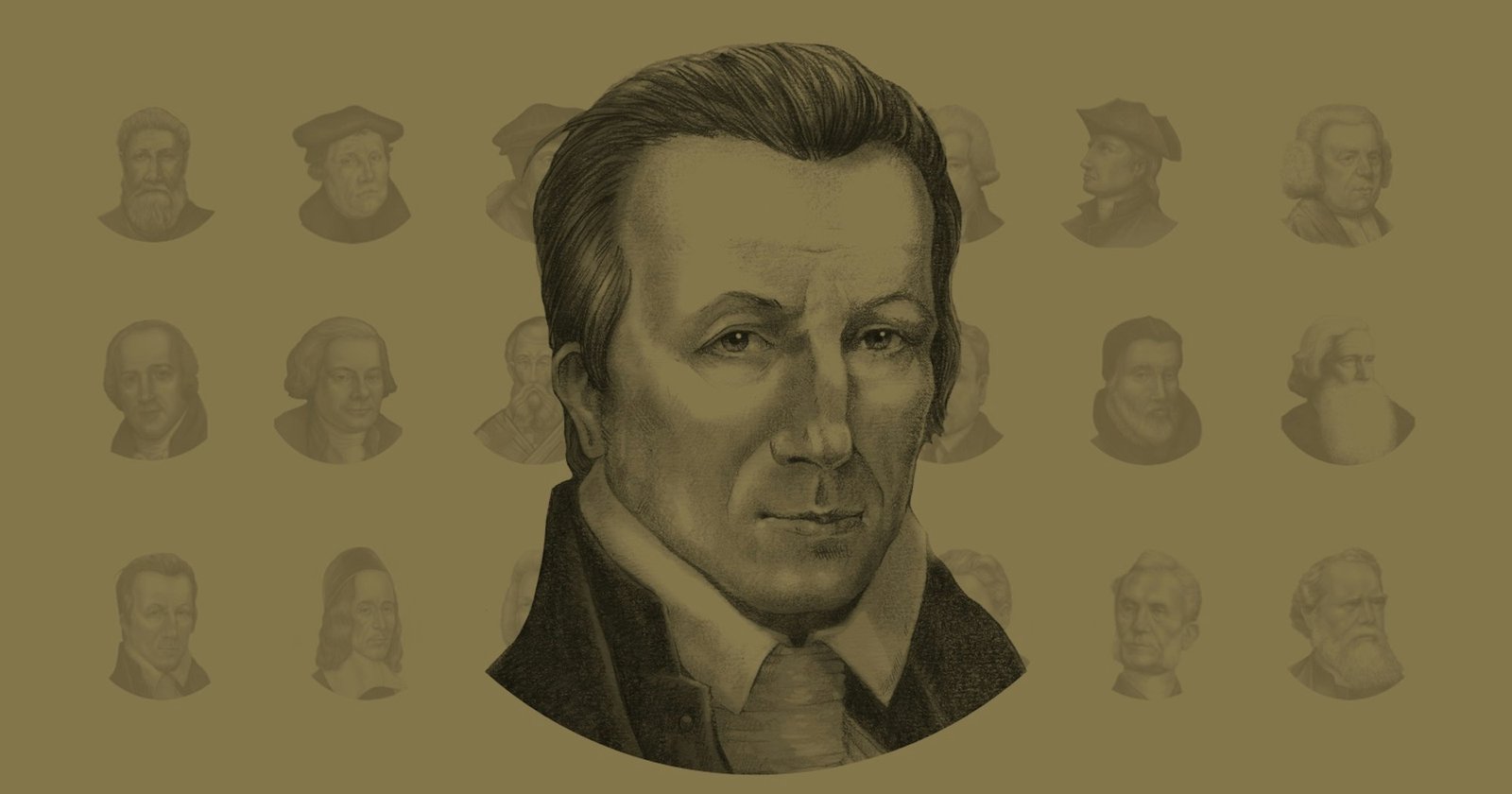
Adoniram Judson's story of loss is heartbreaking. Just when it seems that the last loss was the hardest and that he can no longer bear it, a new trial comes. Indeed, this journey would seem unbearable if we did not see it through the prism of God's plan in historical perspective. The seed that died a thousand times gave birth to a remarkable spiritual movement in Myanmar (formerly Burma), where thousands came to Christ.
«"Judson's life was like a grain of wheat that fell into the soil of Myanmar and died again and again."»
When Adoniram Judson arrived in Burma in July 1813, it was a hostile and completely inaccessible country for the Gospel. William Carey, whom Judson had met a few months earlier in India, advised him not to go there. Today, Burma would probably be considered a «closed country» because of its anarchic despotism, bitter war with Siam, constant enemy raids, numerous rebellions, and lack of religious tolerance. All previous missionaries had either died or been forced to leave the country.
But Judson went there with his 23-year-old wife, to whom he had been married for only 17 months. He himself was 24 years old, and he served in Burma for 38 years, until his death at the age of 61, making only one trip home to New England after 33 years of service. The price he paid was extremely high. He was the seed that fell into the ground and died again and again.
Unusual offer
Adoniram Judson entered Andover Seminary in Newton, Massachusetts, in October 1808, and on December 2 of that year he solemnly dedicated himself to God. The fire of missionary calling was burning in Andover. On June 28, 1810, Judson, with others, volunteered for missionary service in the East. That same day he met Anne Hasseltine and fell in love. A month after meeting Anne, he announced his intention to become her lover, and wrote the following letter to her father:
Now I must ask you, can you consent to part with your daughter early next spring, never to see her again in this world; can you consent to her going away, and to her undergoing the hardships and sufferings of missionary life; can you consent to her being exposed to the dangers of the ocean, the pernicious effects of the southern climate of India, every want and suffering, humiliation, insults, persecution, and perhaps even a violent death? Can you consent to all this for the sake of Him who left His heavenly home and died for her and for you; for the sake of dying immortal souls; for the sake of Zion and the glory of God? Can you consent to all this in the hope of soon meeting your daughter in the world of glory, with a crown of righteousness, illumined with praise, to be offered to her Saviour by the Gentiles, saved through her from eternal sorrow and despair? (From the book "To the Golden Shore", p. 83).
Her father, surprisingly, said that she could make her own decision. Adoniram and Anne were married on February 5, 1812, and fourteen days later they set sail for India with two other couples and two single men. To be on the safe side, they decided not to take the same ship, but to split up and sail in different ships so that if one was sunk, the others could reach their destination. After a short stay in India, Adoniram and Anne decided to take the risk and set out for a new missionary territory. They arrived in Rangoon, Burma, on July 13, 1813.
Long and painful harvest
In Burma, a lifelong struggle began in temperatures of 40 degrees with cholera, malaria, dysentery, and other unknown ailments that took not only Anne, but also his second wife, seven of his thirteen children, and one by one his colleagues.
Despite the challenges of illness and constant interruptions, Judson worked hard to learn the language, translate the Bible, and evangelize on the streets. It was only six years after he and Ann arrived that they baptized their first convert, Maun Nau. The sowing was long and hard, and the harvest even harder for many years. But in 1831, nineteen years after their arrival, a new spirit began to take hold in the country. Judson wrote:
The spirit of seeking truth … is spreading everywhere, throughout the length and breadth of the country. We have distributed nearly 10,000 tracts, and have given them only to those who have asked for them. I suppose there have been about 6,000 home visits. Some have come after a two or three months« journey from the borders of Siam and China: »Sir, we have heard that there is an eternal hell. We are afraid of it. Please give us a scripture that will tell us how we can escape it.« Others have come from the outskirts of Cathay, 100 miles (160 km) north of Ava: »Sir, we have seen a scripture that tells us about an eternal God. Are you the man who distributes such scriptures? If so, please give us one, for we want to know the truth before we die.« Still others have come from the back country, where the name of Jesus Christ is little known: »Are you a man of Jesus Christ? Give us a scripture that will tell us about Him.« ("To the Golden Shore", pp. 398-399)
But between the first convert in 1819 and this outpouring of God’s power in 1831, a huge price was paid.
Imprisoned and lonely
In 1823, Adoniram and Anne moved from Rangoon to Ava, the capital, some three hundred miles inland, up the Irrawaddy River. This was risky, as it put them close to the despotic emperor. In May of the following year, the British fleet arrived in Rangoon and bombarded the harbor. All Westerners were immediately considered spies, and Adoniram was forcibly removed from his home. On June 8, 1824, he was thrown into prison. His feet were shackled, and at night a long horizontal bamboo pole was lowered between the shackled legs and raised so that only the prisoner's shoulders and head touched the ground.
«"The suffering he experienced deprived him of excessive expectations for this world.".
Anne was pregnant, but she walked the two miles to the palace every day, begging for mercy and insisting that Judson was not a spy. On November 4, 1825, Judson was unexpectedly released. The government needed him as an interpreter for negotiations with Britain. The long ordeal was over—seventeen months in prison and on the verge of death, while his wife sacrificed herself and their child to support him as best she could. Anne's health was failing. Eleven months later, on October 24, 1826, she died. Their daughter died six months after that.
“I Can’t Find Him”
The psychological impact of these losses was devastating. Self-doubt took hold of his mind, and he wondered if he had become a missionary for ambition and glory rather than humility and self-sacrificing love. He began to read Catholic mystics such as Madame Guyon, Fénelon, and Tom à Kempis, who led him to solitary asceticism and various forms of self-punishment. Judson abandoned his life’s work of translating the Old Testament and became increasingly distant from people and «from anything that could, as he thought, support his pride or give him pleasure» («To the Golden Shore,» p. 387).
He dug a grave near his hut and sat beside it, contemplating the processes of decomposition. For forty days he secluded himself in a jungle full of tigers, and in one of his letters he wrote that he felt a complete spiritual emptiness. «God is Great and Unknown to me. I believe in Him, but I do not find Him» («To the Golden Shore,» p. 391).
His brother Elnathan died on May 8, 1829, at the age of 35. Paradoxically, this was a turning point in Judson's recovery, for he had reason to believe that the brother he had left in unbelief seventeen years earlier had died in faith. Throughout 1830, Adoniram gradually emerged from the darkness of his spiritual state.
The Completed Bible and a New Wife
The central task of Judson's missionary work from the very beginning, and especially at this stage of his life, was the translation of the Bible. During these years of spiritual renewal, left without a wife and children, he retired to a small room specially built in order to devote almost all his energy to perfecting the translation of the New Testament and continuing work on the Old Testament.
By the end of 1832, three thousand copies of the completed translation of the New Testament had been printed. He completed the Old Testament on January 31, 1834.
When the first Burmese Bible translation project was completed, it seemed that God had blessed his labors with a new wife. Three years earlier, a missionary named George Boardman had died in Burma. His widow Sarah remained in Burma and became a legend, traveling with the infant George deep into the country, actively engaging local communities in Christianity, and organizing schools for girls. In February 1834, Judson received a letter from Sarah. The letter was part of their professional interaction as missionaries, but it was also the beginning of their later personal relationship. On April 1, he set out from Maulmin for Tavoy, determined to woo her. On April 10, they were married.
These were to be some of Judson's happiest times in Burma, but they were not without pain and lasted no more than a decade. In eleven years, Sarah gave birth to eight children and became so ill that the family decided to sail to America in the hope that the sea air would help her recover. Judson had not been to America for 33 years and returned only for his wife. In September 1845, as they rounded the Cape of Africa, Sarah died. The ship anchored off the island of St. Helena only to dig a grave, bury his wife and mother, and continue sailing.
This time Judson did not fall into the deep depression he had before. He had children. But more than that, his suffering had led him away from excessive hopes for this world. He learned to hate his life in this world without bitterness or depression (John 12:25). Now he had one passion left: to return and give his life to Burma.
Few people die so hard.
Judson's stay in the States did not go as planned. To everyone's surprise, he fell in love for the third time, this time with Emily Chubbuck, and married her on June 2, 1846. She was 29, he was 57. She was a famous writer, but she left her fame and career behind to go with Judson to Burma. They arrived there in November 1846. God gave them the four happiest years of their lives.
Adoniram and Emily had one child. All seemed bright, but then old ailments attacked Adoniram for the last time. The only hope was to send the seriously ill Judson on his journey. On April 3, 1850, he was taken aboard the ship Aristide Marie, bound for the island of France, with his friend Thomas Rennie to look after him. In this suffering, he was occasionally seized by unbearable pain, ending in vomiting. One of his last phrases was: «How few there are… who die so hard!» («To the Golden Shore,» p. 504).
«"The seed that died a thousand times gave life to an extraordinary movement toward Christ in Myanmar."»
At 4:15 p.m. on Friday, April 12, 1850, Adoniram Judson died at sea, far from his family and the Burmese church. That evening the ship stopped. «The crew gathered quietly. The port port was opened. There were no prayers. The captain gave the order. The coffin slid down the port into the night» («To the Golden Shore,» p. 505).
Ten days later, Emily gave birth to their second child, who died at birth. Four months later, she learned that her husband had died. She returned to New England the following January and died of tuberculosis three years later, at the age of 37.
The fruit of this dead seed
Judson’s life was like a grain of wheat that fell into the soil of Myanmar and died again and again (John 12:24). The suffering was immense. But so was the fruit. At the turn of the second and third millennia, Patrick Johnston estimated that in Myanmar (the new name for Burma) the Baptist Convention had 3,700 congregations with 617,781 members and 1,900,000 adherents—the fruit of this dead seed.
Of course, there were others besides Judson - hundreds of other missionaries over time. They also came and gave their lives. Many of them died much younger than Judson. All of them only emphasize the main point. The amazing fruit that exists in Myanmar today grew out of the suffering and death of many missionaries, especially Adoniram Judson.
